The tongue’s blood does not run dry by Assia Djebar

The tongue’s blood does not run dry by Assia Djebar

Algerian Fiction

Translator – Tegan Raleigh

Assia Djebar name has flown high in the nobel odds the last couple of years so I decided to try her ,before she does win it .Assia Djebar is her pen name her real name being Fatima-Zohar Imalayen ,she is a Algerian of Berber origins , she was the first Algerian women to go the prestigious ENS  the elite Parisian college .Her first book was published in 1957 ,she was also the first Maghreb to be voted on to the  Académie française and won the Neustadt prize .I must say given all that she is still not well-known in the english speaking world and really should be .

This collection the first of two books I got by her from the library is a collection of short stories and a 80 page novella Felicie’s body ,I ll leave the stories mainly set in Algeria and all dealing with a female perspective on what it is to be a women in modern Algeria ,Felicie’s body deals with a women near the end of her life and indeed after her death she is french catholic and was married for her life to her Algerian husband who died before her now nearing the end of her life we see her having to take a muslim name to be buried beside her beloved husband this story really catches what it is to be between two worlds as this family is some of her children drawn to Algeria other to France we see how this family copes with her death of the mother and her wishes to be buried beside her husband in Algeria .

You arrive on a Monday morning in February ,unconscious already.In the ambulance ,I sit down next to my sister Ourdia ,who’s come with you from Oran .I tell myself this time you’ve come to die by my side ,right under my eyes .But will you at least look at me ,just once ? Smile at me ,maybe talk ?

The opening of Felicie’s body .

I was trying to  think of a way to sum up her writing and how it impacted me but I think  she  has  best summed up by a quote of her own –

I write like many other Algerian women with a sense of urgency against regression and misogyny .

That sums up so well how this book grabbed me and her as a writer feisty and lots of strong female characters .I asked my self is this a potential nobel winner having read other Nobel winners work and the answers is yes and I hope she does so her work can reach a wider audiences of readers .Her’s is a voice that lifts the lid on the female Muslim world of north africa and also how these women or there families are effected in France .The translation works a treat her the translator is new to me but has done a great job here .The book was published in the US  by seven stories press in 2006 and the original stories were published in French in 1997 .

Have you read her works ?

Have you a favourite North African writer ?

winstons coffee and muffin – plugged in


Well after a week away for blog and google reader ,Facebook  for most part ,I feel refreshed and ready to face the blogging world again .I had a busy week at work til thursday and then I’ve had the weekend with Amanda we went to Sheffield on friday and I called in there Waterstones which is much large than the one than we have in Chesterfield .So here are the books I got .

Dona Flor and her two husbands by Jorge Amado – Brazil’s most famous writer of modern times ,a women loses her first husband,she  remarried and then her first husband reappears on her first night with her husband .I liked sound of this one in the shop .

Petersburg by Andrei Bely – This was mentioned on a radio show the other week and I remembered it was one I had noted a time ago as to read .So this new penguin edition seemed a great buy Vladimir Nabokov choose it as one of his five favourite books .He is often called the russian James Joyce .

Cairo swan song by Mekkawi Said – the other day I noticed my supply of Arabic books had run down in last couple of years so this is a welcome addition to that pile short-listed for the Arabic booker prize in 2008 .Mustfa tells the story of himself and his friends growing up in modern Egypt .

I brought the fourth book at tesco the other day as Amanda saw a book she wanted and I saw this one .

The savage altar by  Asa Larsson – this is the first in the Rebecka Martinsson series ,after I enjoyed until thy wrath be past .I looking forward to seeing where this story starts .


I also visited the local Oxfam on saturday and brought three books –

Grotesque by Natsuo Kirino – A Japanese thriller ,every one is 1Q84 at mo .I’ll try something else and I liked the sound of this very dark sounding book .

Malgudi days by R K Narayan – I had this from library as part of a collection of four of his books but didn’t get to read it so this was a good find as I love the world of Malgudi Narayan drew in his books .

The hard life by Flann O’Brien – I keep saying to Kim mainly of reading matters I need to read some irish fiction so got another of O’brien to read he is clever and funny but sometimes I find him a little hard to get hold of and I like that when I m reading .

Have you read any of these ?

What did I miss ?

Trevor for booker

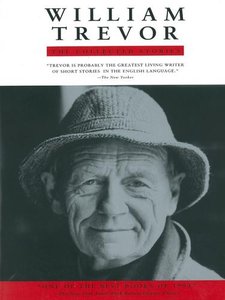
I ve long been a fan of the Irish writer William Trevor ,for those of you not familiar with him he is often called the irish Chekov ,Tim Adams of the observer said of him “widely believed to be the most astute observer of the human condition currently writing fiction .He has long been a booker bridesmaid with five nominations one long list in 2009 and four shortlists 1970 (Mrs Eckdorf in O’Neils hotel ),1976(The children of Dynemouth) ,1991(Reading Turgenev) ,2002(The story of Lucy Gault ).So rather than the Booker prize do what they did with the other booker bridesmaid Beryl Bainbridge and have a prize after she died why not honour the man whilst he is here I feel after the fuss this years prize caused say oh well we’ll stop for a year give it to William as a special one-off price for 2012 for the body of his work ,I would imagine many readers would be disappointed with this choice also it would honour William’s contribution to modern English literature he is a writer that has mixed Chekov, Maupassant short story talent with a touch of Irish tradition from Joyce and O’Connor with the English literature of Maugham and Greene .I love the booker I felt I gave the wrong impression last week it has led me to many good books ,my problem was with this year and recent years that I felt let down with the prize that has been dear to me .But never wanted to lessen the prize and I don’t think readability is dumbing down it is up to each of us what is readable .I felt near the prize being given some people went a little over the top with the vileness of the opinions and also the puppets that think these people are a sort of demi god of English literature !Any way if you think this is a good idea please write a post maybe if enough of us little people shout loud we can make the Horton’s of this world listen !!!! Please support this William Trevor is a writer that touches the soul !!

Borges – Tom Castro ,the implausible impostor

Tom castro – published 30 sept 1933

translated by Norman Thomas di Giovanni

Collection  A universal history of infamy

Well after a couple of months I finally get round to my Borges project ,the stories I choice will be ad hoc todays is Tom castro this is one of Borges earliest stories from the thirties .It is about Tom castro or Arthur Orton a con man from the 1800’s ,he and his manservant a black man called ben Bogle tried to pass them selves of as the long dead Sir Roger Tichborne ,The story actually is an authentic telling of the actual  story .Castro a large built australian man tried to pass him self of as the slim English heir to the ninth largest fortune in england  as his Tichbourne mother believes he is still alive even thou she was told he died .This case made the headlines and had a lengthy court case ,which Castro was found guilty .Borges is at his sparest with his writing here no fleshing out just the bare facts and a little window dressing but enough to get the facts of the story in ten pages .This story was also made into a film called The Tichbourne Claimant  in the 1980’s

Have you read this story or seen the film ?

Steig Larsson my friend by Kurdo Baksi

Steig larsson my friend by Kurdo Baksi

Swedish Non fiction

Translated by Laurie Thompson

Steig Larsson is without a doubt the biggest success in translated fiction of recent times ,he also lead to the great number of Nordic crime books we see on our book shop shelves ,unfortunately he died before the huge success of the books he wrote hit home  ,so this book by a colleague and good friend of the man is a great insight into him as a person and writer .Kurdo Baksi a Kurd writer journalist and magazine owner , that has lived in Sweden since the 80’s like Stieg he is a figure in the anti fascist movement in Sweden and runs a magazine about anti fascism .he first meet Stieg in 1992 as their paths crossed with stieg,s non fiction books on the extreme right in Sweden and the shared beliefs in this movement grew into a great friendship .They both ran magazines Stieg Larsson Expo and Kurdo Baksi Svartitt .We let into the world of Swedish journalism where these two writers Stieg in particular walk a line of danger where because they have highlighted the extreme right with exposes of these movements ,they have to watch what they do ,then there is also the hate mail he got from the right-wing nutters .What you get is Stieg dedication to democracy   and freedom of speech this lead to long hours and as Kurdo put it a man fueled by cigarettes and coffee in equal measures .The two men are drawn closer when Stieg magazine runs into trouble so rather than let it go out of print he and Kurdo join together and publish the two magazines as one as Kurdo is a better business man than Stieg  .THE other thread of Stieg life that kurdo lets us  into is the personnel man Stieg lived with his partner Eva whom kurdo knows well and helps at times when she is worried about Stieg  had traveled a lot in his youth as a sort of backpacker spend time in africa this had a lasting effect on him .

On 30 november 1998 ,T.T . issued a newsflash .The anti racist journal Expo had been resurrected ,thanks to a merger with the swedish magazine svartvitt .

I was quoted ;”expo had been outstandingly good at investigating racism .but they never grasped how to make money .That is where I can help them ”

The magazine combine their talents .

So you can say I liked this book in fact I loved it read it in an evening as I want to learn  more a\nd more about Stieg I enjoyed the millenium trilogy when I read it and knew a bits about Stieg’s life, but this book fleshed out the scant facts I had . He comes across as a man who work hard in fact a real workaholic that slept very little  and cared for his fellow-man ,the millenium trilogy is just part of his story his activism was the bigger picture and that in turn is shown in the books of the millenium trilogy which the Kurdo appears in as a character .This bio is a loving tribute from someone who knew Stieg and admired him also due to working everyday with him for later part of Stieg life knew him as he worked on the books that made his name .

Have you read this or Stieg’s trilogy ?

Accaabadora by Michela Murgia

Accabadora by Michela Murgia

Italian Fiction

Translator – Silvester Mazzarella

Well sometimes a book drops on the doorstep from a publisher and you go oh ,this was one I look at it and saw on the back cover that it had won six literary prizes in Italy ,that spike my interests as I can’t remember a recent  English book winner that many garlands in recent times .The other thing I liked about getting sent this book is the fact I probably wouldn’t have got it myself .so what is it about . The title is the name give to a women that acts as an angel of death to the dying in rural Sardinia this particular Accabadora is called Bonaria Urrai ,she had adopt a young girl Maria hows mother was struggling looking after her .Maria think Bonaria is just a simple dressmaker, as Bonaria has tried to shield her daughter from her other job but over time Maira wonders where she disappears to at night  times  .But when maria finds out after Bonaria makes a difficult call on one young man she has been asked to attend , this sets of a chain of events that leads to her leaving her rural life and heading to the big city in this case Turin ,in a way this is just like any young women wanting to break free of family but in Maria’s case its overtures of what happened played on her mind whilst there leading to an interesting climax .

The attittadora had meanwhile changed her note ,intoning an improvised poem in praise of the dead man .To hear her shrieking in rhyme you would imagine no better man than Giacomo Littora had lived .

We meet the Attittadora (official mourner)

I could instantly se why this book won so many prizes Michela has tackle euthanasia in such an even and non-judgemental way ,one of the most even views of this subject I ve ever read  ,I found it hard to imagine some such as Bonaria being around Italy at the time the book is set  but a little web browsing show there were such people in real life ,hard to think as Italy is such a strong catholic country  .The book deals with what family is too people and also how we all deal with death and the thought of a midwife of death as we brought into life by a women and thus should be seen into death by a women when needed .But also an underling theme to me is changing world of  the traditional   rural life and the busy modern cities of Turin ,I remember the films of Italy at the time the book is set in the forties  and  fifties the neo realism movement films like Rome open city and Stromboli   and felt this book would have made a great neo realism film the quality of realism that falls of the page would work so well on the screen and you could imagine real people in rural Sardinia maybe letting us into this traditional world that I knew little of myself .so if you after a touching page turner this is the book for you .

Have you read this book ?

What are we missing ?(2) Days of ziklag

The second in an occasional series of post about books and writers yet to hit us in English .This is the epic novel by S Yizhar published in 1958 ,I first came across this after  reading his novella Khirbet Khizeh that Granta published I reviewed it here .Days of ziklag it also set in the Israeli war of independence and covers six days of that war ,follows a squad of the defence force and is told in a stream of consciousness style of story telling ,and is based oon a real area of conflict in that war .Now the main reason for it not being translated is probably its size that is 1100 pages in its original Hebrew,this means it would be a bit longer in English as it uses more vowels than Hebrew in its written language .Another is the time to translate It took Peter Nadas Translator Imra Goldstein 5 years to translate Parallel stories a book of similar length and like Hebrew from a language not connect to English in its origins .It is considered the greatest book on this conflict and the best in modern Israeli fiction classic so why hasn’t a publisher taken the dive and translated it ? for more info on S Yizhar here is a link to his wiki page .If anyone knows if rights have been sold and a translation is forth coming I be very interested to know .

books ,booker ,literature prize ?

Well I stuck my nose in a conversation about the booker prize and the new prize announced this week as a counter to the booker ,now I view the new prize as a positive move the booker has been around unchallenged as the premier prize for literary fiction in the english speaking world for a long time ,so like most things that have had control of a market for a long time maybe it has got a little flabby at the waist and let its self go a bit and standards have dropped  .The new prize is in part a reaction to this years jury which in literary terms is a little lightweight and the choices of long list and shortlist have sparked much discussion on what the booker means in people’s eyes ,also a comment by the judge Chris Mullins in regards readability of the books he choose .I had long been a fan of the booker and have read many shortlisted booker books over years .

So what does the booker mean to me as a prize well I look at literary fiction a like Everest we maybe have to be like sir Edmund Hilary reach the peak  but then climbing didn’t stop and give up ,no but like all climbers we look for the new unclimbed peaks however hard ,or the new route up the mountain via a new path ,or a new way of climbing that maybe dangerous or innovative  and I think this metaphor works for the booker and reading for me in general I like to challenge myself . This is what reading  as the climbing metaphor  is ,not for climbing the same route or going to Ben Nevis and making out it is a hard as climbing Everest ! So that said what does this reader look for in his booker shortlists and winners well I ve a few things, and will use previous winners and shortlisters to show what I look for and why I think the prize has drifted of late as most of the books mention are pre 2003  –


Language 

I like a book that shows the bounds of the english languages and what can be done with it I perfect example would be James Kelman how late it was ,how late a book that showed the ability of language and regional accents a book wrote in a clear broad Glaswegian accent was it readable well if you were from Glasgow yes but otherwise it was a wonderful insight into how broken english can be shattered and remade in Scotland into a brutal but effective language that suits its setting .

Genre expanding  

Now I m going pick two books both works of magic realism the are Midnights children by Salman Rushdie  and Famished road by Ben Okri both winners in the 80’s They both approached the Magic realism genre in different ways Rushdie use it as a blueprint for the tale of modern India ,Okri as a way to open village life in Africa and Africa myths to the reader .Keneally Schindler’s ark also did same for biographical novels .#

sets a new mark 

I like books that when you read you can say that will be cited for years after as a turning point in fiction .I ve got a recent winner in mind Wolf hall I think even thou I didn’t really enjoy it ,I can see it being a book that has raised the bar on historic fiction and  will be the one the people say was a game changer and will be the one people read to get inspired to write historic fiction .

just talent 

Now some writers just oozes talent now around booker shortlist it is obvious who has influenced english literary fiction for years people like Beryl Bainbridge and William Trevor although neither won a booker both have had multiple short-listed books  over 20 plus years why because the constantly show the bounds of the English language Peter Carey and J M Coetzee have both won on more than one occasion and this  is due to there talent as writers both try to set a new path to follow  with each new  book and usually succeed in showing how you can be different even in the same field of fiction .

There are the things I look for in a winner books that try to climb Everest set new marks and leave me as a reader want more ,I think the rot set in with the booker in 2003 the short lists since then have been weaker that earlier ones so a new prize is welcome and well all be able to judge what difference it has made to the booker and what direction the new prize is set in .Although I must note it is a missed chance for a general prize for  literary fiction that also including translations   published within in a year .I personally think this hasn’t happened because it would show how much great fiction is coming to readers from outside the English speaking world !! that does all of what I state in the qualities of a booker winner and usually far better

What do you think ?

The flight of Icarus by Raymond Queneau

The flight of Icarus by Raymond Queneau

French Fiction (OULIPO movement )

Translator – Barbara Wright

I ve long been interested in the oulipo movement of which Queneau was the co-founder ,inventive and constrained fiction and poetry .Well the flight of Icarus is firmly in the inventive side of Oulipo .What is it about well we meet Hubert a writer in Paris in 1895 .He is working on a new novel .Well he comes on morning to discover that the main character in his book has disappeared searching through what he has written he has no luck no Icarus has flown the text so to speak . THe book then is told in two storylines well short scenes really 74 in all in 158 pages .the first follows Hubert trying to find Icarus ,first by talking to fellow writers to see if one of them has stolen Icarus then he hires a detective .the second story line follows Icarus as he has broken the constraint of his book discovering new pleasures in the seedy part of Paris .THE two storyline draw closer as we reach a wonderful climax .

Hubert – he doesn’t seem to be here

Surget – He ? Who’s he ?

Hubert – You remember the other day .I read you the first few pages of my new book ….

Surget – No reason to come and turn mine upside down !

Hubert – You were good enough to think highly of my chief character though I had barely begun to outline him .You complimented me on him

Surget – perhaps

Hubert – He was called Icarus

Surget – I remember

Hubert – Well – he’s disappeared !

Surget – He can’t have ! What a joke

Hubert searches his rooms for the missing Icarus to see if he has jumped book .

As you can see the novel is in script form a novel Oulipo idea I would think .So Icarus has done what the call in tv terms broken the fourth wall and that is escape the confines of his book .Hed goes round tasting the pleasures of Paris at that time absinthe and such very much in the style of the classic Belle Époque fiction of the time from the likes of Proust and Musil Icarus is a man discovering the world for the first time .Hubert himself is an homage to Humbert Humbert the main character of Vladimir Nabokov’s Lolita  like Hubert a writer in paris .Icarus is like his greek namesake a man who gets unstuck once he tries to escape his confines this being a book he has been written in . The book is typical of th other Oulipo works I ve read by Calvino ,Perec and Mathews .It works well where as a couple of the others I have read in the past are  oft style over content this one has a workable narrative and is very funny in parts .

All – he ‘s falling ! he’s falling to his death !

Icarus falls

But what happens well you’ll have to find out .The translation was done by Barbara Wright translated most of his worked and lived in Paris and was a specialist in translating surreal and existentialist writing .

Have you read any Oulipo movement books ?

Have you read Queneau ?

German Lit Month

I wasn’t overly keen to join the german lit challenge that has been organized by Marcel of Lizzy’s  literary life and Caroline of beauty is a sleeping cat I read a lot of germanic literature as it is one of my favourite areas of translated fiction but I m notoriously bad a challenges but I ve pulled my socks up and got the planning head on as Worzel Gummidge would have said so here is what has been read ready and what is waiting to be read –


Read 

So here are books read for german lit month so far –

Homo Faber by Max Frisch – one mans life summed up whilst he is stuck in the desert .

Visitation – Jenny Erpenbeck – this was iffp shortlist was one I didn’t review at time have read since but not reviewed so will do next month a village told in fable like style .

Correction – Thomas Bernhard .Bernhard was the best post war german writer this is about a man building a  cone in a woods but about more than it seems !

The wall jumper – Peter Schneider Set in time of berlin wall a journalistic style book about people who tried to cross the wall .

Jarmilla -Ernst Weiss  Stefan Zweig’s best friend a love triangle in a rural town in bohemia in the 30’s

Maybe this time -Alois Hotsching tales of the unexpected ,weird going ons a very unusual short story collection .

not pictured but read

Nadirs – Herta Muller her debut collection ,family life and the horrors of communism

Robert Musil and Hans Fallada mini penguin classics from earlier this year .

To read 

Auto de fe by Elias Canetti – The story of Peter Kien from the Nobel winner he was Bulgarian but wrote in german

The case of sergeant Grischa by Arnold Zweig – Classic WW1 story with a anti-war message .quote on front caught my eye from J B Priestley “the greatest novel on a war theme … from any country ” sounds great .

The pigeon by Patrick Suskind – the reclusive german writer isn’t new to me but having just read perfume this tale partly inspired by the raven by Poe sounds like a great second book to read a man driven mad by a pigeon .

A perfect waiter by Alain Claude Sulzer I thought I d read a couple Swiss novels but looked at blog and hadn’t so picked this up set in mid 1930’s about a waiter in a hotel looked like a great choice .

Well that’s it so far I hope to get to library again this month for a few more so can try to get a couple more ready have some on my shelves to either reread or not read as well .

What are you reading for german lit month ?

Have you read any of these ?

Sarajevo Marlboro by Miljenko Jergovic

Sarajevo Marlboro by Miljenko Jergovic

Bosnian fiction

translator Stela Tomasevic

This book was sent to by my friend Simon of Inside books .I was happy he sent it as it was one I d meant to get around the time it came out but hadn’t and then it had dropped out of my mind .The book is a collection of stories set in and around Sarajevo the capital of Bosnia before and during the war .As I mention before I work in Germany around this time and many of the people in the factory I worked were refugees from Bosnia and Croatia.So as I got to know many of them I heard similar things to the stories in this book . My favourite story is one called Bosnian hot-pot we follow two young women Elena and Zlaja  around the the city  of Zagreb during the war for a clay pot to make a Bosnian hot-pot  like they would in Sarajevo .This story is familiar as it partly metaphor for the city pre war every one made the same hot pot of many parts like the city they had Bosnia , Croat and Serb  living side by side in a harmony  in the pre war Sarajevo .

For a long time Elena and Zara searched everywhere in Zagreb for a clay pot .In the end they found two pots – at opposite ends of the city – that were ideal for preparing the traditional dish .

they find the pot .

Other stories look at pre war and like many of the people I worked with the former Yugoslavia  president Tito is mention as the man who held the country from the second world war ,he was respected and in some ways feared by all .We meet people who lived in Sarajevo that have got out and now looking at the horror unwind from the sidelines ,upset and not understanding the horrors .Then we find how the book got its title in the story The Gravedigger as A man offers the gravedigger packet of cigarettes wrapped up that turned out to be  some old Sarajevo Marlboro (it turns out Philip morris allow each country and even places make slightly different versions of this brand ,I can acknowledge this as I smoke Marlboro for many years and always notice subtle changes when in different places ) .This makes the gravedigger wonder what the man an american makes of them maybe he things we re all mad he says .

the american is curious too ,but he has no idea what I’m doing at last I undo the  cigarette packet to reveal a Marlboro wrapper the old brand from  Sarajevo

we discover the meaning of the title of this collection from the story the Gravedigger .

The Croat writer  said of the many book written about Bosnia that it is perhaps the best collection of stories .I couldn’t agree more this brings you into the besiege city and the people that live there or lived there .I ll end with a video of a song from  Passengers  featuring Pavarotti called  miss Sarajevo about the city and a beauty pageant that went on in the city during the war .

Have you a read any books around the Yugoslavian conflict ?


Nobel winner 2011 ?

Well its nobel time again the yearly award that in last few years has got harder to call as the choices seem more obscure to us english language readers but not on the world stage so I ll throw a number of names up and why they could and why they couldn’t from favourites I ve seen mention and my own feelings –

Philip Roth – well he is the one I feel will win as it has been a long time since an us winner and he is probably the last of the big writers from sixties ie mailer and Updike etc .

PROS – well-known ,make up for Updike or mailer not winning Nobel

CONS – has won man booker this year ,recent books not as good as earlier cannon .

Juan Goytisolo – father of modern spanish writing ,

PROS – he is in Nobel mode of recent years tends to be experimental in his fiction ,best regarded living writer in Spain

CONS – rare for two writers from same language to win in following years

Haruki Murakami Japans best known writer

PROS – he’d be a very popular and well-known choice ,his masterpiece has just come out iq84 due in english soon

CONS – maybe to young ,maybe to well-known

Elias Khoury -my favourite arabic writer (I ll also note the Syrian poet Adonis I ve note read him but he’d have similar reasons to Khoury )

PROS – he is just a wonderful writer ,also with Arab spring be nice to see a voice of Arabic world chosen .

CONS – none really he be a great choice

Ben Okri – I like him enough said and have met him and he is so passionate about fiction

Pros does a lot to promote literacy and reading ,African winner is need at some point

CONS – too young ,maybe not lived up to early promise fully

Ismail Kadare – Has been on the list of contenders a number of times

PROS – Has not written a bad novel ,a new language to win the Nobel prize

CONS – Maybe should have won and as Michael Orther said to me on twitter there has been a lot of eastern european winners .

Ulrich Holbein – the German writer yet to be translated to English ,did shoot up last year in odds .

PRO – obscure ,experimental

CONS – Not well-known outside Germany

Cees Nooteboom – Hollands greatest living writer and master of numerous styles of writing poetry ,fiction and travel writing .

PRO – truly talented

CONS – none really he would be the ideal winner

Peter Nadas – the Hungarian master

Pro – maybe the best living writer (as I draw to end of his latest book)

Cons – he has not written a lot as a slow writer .

my tenth choice is a handful of names I ve not read but heard mentioned

Ko Un – Korean poet

Les Murray – Australian Poet

Antonio lobo Antunes – Portuguese writer (frank Wynne suggested I read him ,still waiting for library copy )

Ngugi wa Thiong’o – Kenyan writer ~(read him but one book many years ago)

Here are the odds on Ladbrokes a big move up odds , late on is usually sign of the winner .

Nobel winner 2011 ?

Well its nobel time again the yearly award that in last few years has got harder to call  as the  choices seem more obscure to us english language readers but not on the world stage so I ll throw a number of  names up and why they could and why they couldn’t from favourites I ve seen mention and my own feelings –

Philip Roth – well he is the one I feel will win as it has been a long time since an us winner and he is probably the last of the big writers from sixties ie mailer and Updike etc .

PROS – well-known ,make up for Updike or mailer not winning Nobel

CONS  – has won man booker this year ,recent books not as good as earlier cannon .

Juan Goytisolo – father of modern spanish writing ,

PROS  – he is in Nobel mode of recent years tends to be experimental in his fiction ,best regarded living  writer in Spain

CONS – rare for two writers from same language to win in following years

Haruki Murakami Japans best known writer

PROS – he’d be a very popular and well-known choice ,his masterpiece has just come out iq84 due in english soon

CONS – maybe to young ,maybe to well-known

Elias Khoury -my favourite arabic writer (I ll also note the Syrian poet Adonis I ve note read him but he’d have similar reasons to Khoury )

PROS – he is just a wonderful writer ,also with Arab spring be nice to see a voice of Arabic world chosen .

CONS – none really he be a great choice

Ben Okri – I like him enough said and have met him and he is so passionate about fiction

Pros does a lot to promote  literacy and reading ,African winner is need at some point

CONS – too young ,maybe not lived up to early promise fully

Ismail Kadare – Has been on the list of contenders a number of times

PROS – Has not written a bad novel  ,a new language to win the Nobel prize

CONS – Maybe should have won and as Michael Orther said to me on twitter there has been a lot of eastern european winners .

Ulrich Holbein – the German writer yet to be translated to English ,did shoot up last year in odds .

PRO – obscure ,experimental

CONS – Not well-known outside Germany


Cees Nooteboom – Hollands greatest living writer and master of numerous styles of writing poetry ,fiction and travel writing .

PRO – truly talented

CONS – none really he would be the ideal winner

Peter Nadas – the Hungarian master

Pro – maybe the best living writer (as I draw to end of his latest book)

Cons – he has not written a lot as a slow writer .

my tenth choice is a handful of names I ve not read but heard mentioned

Ko Un – Korean poet

Les Murray – Australian Poet

Antonio lobo Antunes – Portuguese writer (frank Wynne suggested I read him ,still waiting for library copy )

Ngugi wa Thiong’o – Kenyan writer ~(read him but one book many years ago)

Here are the odds on Ladbrokes  a big move up odds , late on is usually sign of the  winner .


Joyce’s pupil by Drago Jancar

Joyce’s Pupil by Drago Jancar

Slovenian Fiction

Translators -Andrew Wachtel and Lilla Potpara

I saw this on the library shelf and the title grabbed me as well as the cover as a fan of James Joyce a book that has a story that is a spin-off from Joyce appeal to me and since reading Slazoj Zizek  The Slovenian Thinker and non fiction writer .I ve been wanting to try some Slovenian fiction .So what is Joyce’s Pupil ? it is a collection of short stories  twelve in all (i ve mention three in the review leaving nine for you to find)mostly set  in the Slovenia or nearby eastern Europe .The main title story is a wonderful story a unknown Slovenian man goes to Trieste university where at the time 1914 James Joyce is teaching them by making them describe an oil lamp ,this is something he would do as a recent show on british tv talking about Irish Gaelic said how very descriptive a language it is and they have many ways to describe a single thing .We then move forward to the second world war and the man has had to runaway from his homeland and ends up as the voice of the BBC radio service for Slovenia broadcasting during the war years to his homeland .But this leads to him being accused of  being a british spy by the communist authorizes .Even thou we don’t know the man or even what he looks like you get the feeling you know him as you see his mortal coil unravel in front of you on the page .Thou the Joyce link is only a bit the thought of bring his pupil would be great idea to any book lover .

The teacher sits back and asks the pupil to describe the oil lamp in english .The pupil gets hopelessly tangled in technical expressions ,and the teacher takes over from him describing the oil lamp in exhaustive detail .He goes on for a full hour indulging a habit that many years later the student will call descriptive passion

Joyce tells the student how to describe in English .

This collection isn’t terribly long at 160 pages but is a great introduction to one of the most respected writers in eastern Europe/ Now Jancar Has that Middle  European eye of questions ,suffering  and alienation all crop up   in his  fictions and not always answering the questions but making you think about them  .stories such as  A  man in a meadow  that gets caught up in something .,a creepy story about eyes  that has two different strands to it one old and one new .all leave you wondering after you have read this collection  .All add to this rich tradition of middle european fiction .He himself was involved with other writers in the Slovenian independence movement ,he is also found of a liberal conservative movement called rally for republic in Slovenia .He was also president of Slovenian Pen in the late 80’s .The translation was divide between the two translators each doing some of the stories .It ‘s a reasonable translation not best nor the worst I’ve read .He has a novel due out next year from Dalkey Archive  called the galley slave .

Have you read any Slovenian fiction ?