books ,booker ,literature prize ?

Well I stuck my nose in a conversation about the booker prize and the new prize announced this week as a counter to the booker ,now I view the new prize as a positive move the booker has been around unchallenged as the premier prize for literary fiction in the english speaking world for a long time ,so like most things that have had control of a market for a long time maybe it has got a little flabby at the waist and let its self go a bit and standards have dropped  .The new prize is in part a reaction to this years jury which in literary terms is a little lightweight and the choices of long list and shortlist have sparked much discussion on what the booker means in people’s eyes ,also a comment by the judge Chris Mullins in regards readability of the books he choose .I had long been a fan of the booker and have read many shortlisted booker books over years .

So what does the booker mean to me as a prize well I look at literary fiction a like Everest we maybe have to be like sir Edmund Hilary reach the peak  but then climbing didn’t stop and give up ,no but like all climbers we look for the new unclimbed peaks however hard ,or the new route up the mountain via a new path ,or a new way of climbing that maybe dangerous or innovative  and I think this metaphor works for the booker and reading for me in general I like to challenge myself . This is what reading  as the climbing metaphor  is ,not for climbing the same route or going to Ben Nevis and making out it is a hard as climbing Everest ! So that said what does this reader look for in his booker shortlists and winners well I ve a few things, and will use previous winners and shortlisters to show what I look for and why I think the prize has drifted of late as most of the books mention are pre 2003  –


Language 

I like a book that shows the bounds of the english languages and what can be done with it I perfect example would be James Kelman how late it was ,how late a book that showed the ability of language and regional accents a book wrote in a clear broad Glaswegian accent was it readable well if you were from Glasgow yes but otherwise it was a wonderful insight into how broken english can be shattered and remade in Scotland into a brutal but effective language that suits its setting .

Genre expanding  

Now I m going pick two books both works of magic realism the are Midnights children by Salman Rushdie  and Famished road by Ben Okri both winners in the 80’s They both approached the Magic realism genre in different ways Rushdie use it as a blueprint for the tale of modern India ,Okri as a way to open village life in Africa and Africa myths to the reader .Keneally Schindler’s ark also did same for biographical novels .#

sets a new mark 

I like books that when you read you can say that will be cited for years after as a turning point in fiction .I ve got a recent winner in mind Wolf hall I think even thou I didn’t really enjoy it ,I can see it being a book that has raised the bar on historic fiction and  will be the one the people say was a game changer and will be the one people read to get inspired to write historic fiction .

just talent 

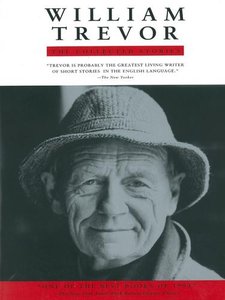
Now some writers just oozes talent now around booker shortlist it is obvious who has influenced english literary fiction for years people like Beryl Bainbridge and William Trevor although neither won a booker both have had multiple short-listed books  over 20 plus years why because the constantly show the bounds of the English language Peter Carey and J M Coetzee have both won on more than one occasion and this  is due to there talent as writers both try to set a new path to follow  with each new  book and usually succeed in showing how you can be different even in the same field of fiction .
There are the things I look for in a winner books that try to climb Everest set new marks and leave me as a reader want more ,I think the rot set in with the booker in 2003 the short lists since then have been weaker that earlier ones so a new prize is welcome and well all be able to judge what difference it has made to the booker and what direction the new prize is set in .Although I must note it is a missed chance for a general prize for  literary fiction that also including translations   published within in a year .I personally think this hasn’t happened because it would show how much great fiction is coming to readers from outside the English speaking world !! that does all of what I state in the qualities of a booker winner and usually far better

What do you think ?

The flight of Icarus by Raymond Queneau

The flight of Icarus by Raymond Queneau

French Fiction (OULIPO movement )

Translator – Barbara Wright

I ve long been interested in the oulipo movement of which Queneau was the co-founder ,inventive and constrained fiction and poetry .Well the flight of Icarus is firmly in the inventive side of Oulipo .What is it about well we meet Hubert a writer in Paris in 1895 .He is working on a new novel .Well he comes on morning to discover that the main character in his book has disappeared searching through what he has written he has no luck no Icarus has flown the text so to speak . THe book then is told in two storylines well short scenes really 74 in all in 158 pages .the first follows Hubert trying to find Icarus ,first by talking to fellow writers to see if one of them has stolen Icarus then he hires a detective .the second story line follows Icarus as he has broken the constraint of his book discovering new pleasures in the seedy part of Paris .THE two storyline draw closer as we reach a wonderful climax .

Hubert – he doesn’t seem to be here

Surget – He ? Who’s he ?

Hubert – You remember the other day .I read you the first few pages of my new book ….

Surget – No reason to come and turn mine upside down !

Hubert – You were good enough to think highly of my chief character though I had barely begun to outline him .You complimented me on him

Surget – perhaps

Hubert – He was called Icarus

Surget – I remember

Hubert – Well – he’s disappeared !

Surget – He can’t have ! What a joke

Hubert searches his rooms for the missing Icarus to see if he has jumped book .

As you can see the novel is in script form a novel Oulipo idea I would think .So Icarus has done what the call in tv terms broken the fourth wall and that is escape the confines of his book .Hed goes round tasting the pleasures of Paris at that time absinthe and such very much in the style of the classic Belle Époque fiction of the time from the likes of Proust and Musil Icarus is a man discovering the world for the first time .Hubert himself is an homage to Humbert Humbert the main character of Vladimir Nabokov’s Lolita  like Hubert a writer in paris .Icarus is like his greek namesake a man who gets unstuck once he tries to escape his confines this being a book he has been written in . The book is typical of th other Oulipo works I ve read by Calvino ,Perec and Mathews .It works well where as a couple of the others I have read in the past are  oft style over content this one has a workable narrative and is very funny in parts .

All – he ‘s falling ! he’s falling to his death !

Icarus falls

But what happens well you’ll have to find out .The translation was done by Barbara Wright translated most of his worked and lived in Paris and was a specialist in translating surreal and existentialist writing .

Have you read any Oulipo movement books ?

Have you read Queneau ?

German Lit Month

I wasn’t overly keen to join the german lit challenge that has been organized by Marcel of Lizzy’s  literary life and Caroline of beauty is a sleeping cat I read a lot of germanic literature as it is one of my favourite areas of translated fiction but I m notoriously bad a challenges but I ve pulled my socks up and got the planning head on as Worzel Gummidge would have said so here is what has been read ready and what is waiting to be read –


Read 

So here are books read for german lit month so far –

Homo Faber by Max Frisch – one mans life summed up whilst he is stuck in the desert .

Visitation – Jenny Erpenbeck – this was iffp shortlist was one I didn’t review at time have read since but not reviewed so will do next month a village told in fable like style .

Correction – Thomas Bernhard .Bernhard was the best post war german writer this is about a man building a  cone in a woods but about more than it seems !

The wall jumper – Peter Schneider Set in time of berlin wall a journalistic style book about people who tried to cross the wall .

Jarmilla -Ernst Weiss  Stefan Zweig’s best friend a love triangle in a rural town in bohemia in the 30’s

Maybe this time -Alois Hotsching tales of the unexpected ,weird going ons a very unusual short story collection .

not pictured but read

Nadirs – Herta Muller her debut collection ,family life and the horrors of communism

Robert Musil and Hans Fallada mini penguin classics from earlier this year .

To read 

Auto de fe by Elias Canetti – The story of Peter Kien from the Nobel winner he was Bulgarian but wrote in german

The case of sergeant Grischa by Arnold Zweig – Classic WW1 story with a anti-war message .quote on front caught my eye from J B Priestley “the greatest novel on a war theme … from any country ” sounds great .

The pigeon by Patrick Suskind – the reclusive german writer isn’t new to me but having just read perfume this tale partly inspired by the raven by Poe sounds like a great second book to read a man driven mad by a pigeon .

A perfect waiter by Alain Claude Sulzer I thought I d read a couple Swiss novels but looked at blog and hadn’t so picked this up set in mid 1930’s about a waiter in a hotel looked like a great choice .

Well that’s it so far I hope to get to library again this month for a few more so can try to get a couple more ready have some on my shelves to either reread or not read as well .

What are you reading for german lit month ?

Have you read any of these ?

Sarajevo Marlboro by Miljenko Jergovic

Sarajevo Marlboro by Miljenko Jergovic

Bosnian fiction

translator Stela Tomasevic

This book was sent to by my friend Simon of Inside books .I was happy he sent it as it was one I d meant to get around the time it came out but hadn’t and then it had dropped out of my mind .The book is a collection of stories set in and around Sarajevo the capital of Bosnia before and during the war .As I mention before I work in Germany around this time and many of the people in the factory I worked were refugees from Bosnia and Croatia.So as I got to know many of them I heard similar things to the stories in this book . My favourite story is one called Bosnian hot-pot we follow two young women Elena and Zlaja  around the the city  of Zagreb during the war for a clay pot to make a Bosnian hot-pot  like they would in Sarajevo .This story is familiar as it partly metaphor for the city pre war every one made the same hot pot of many parts like the city they had Bosnia , Croat and Serb  living side by side in a harmony  in the pre war Sarajevo .

For a long time Elena and Zara searched everywhere in Zagreb for a clay pot .In the end they found two pots – at opposite ends of the city – that were ideal for preparing the traditional dish .

they find the pot .

Other stories look at pre war and like many of the people I worked with the former Yugoslavia  president Tito is mention as the man who held the country from the second world war ,he was respected and in some ways feared by all .We meet people who lived in Sarajevo that have got out and now looking at the horror unwind from the sidelines ,upset and not understanding the horrors .Then we find how the book got its title in the story The Gravedigger as A man offers the gravedigger packet of cigarettes wrapped up that turned out to be  some old Sarajevo Marlboro (it turns out Philip morris allow each country and even places make slightly different versions of this brand ,I can acknowledge this as I smoke Marlboro for many years and always notice subtle changes when in different places ) .This makes the gravedigger wonder what the man an american makes of them maybe he things we re all mad he says .

the american is curious too ,but he has no idea what I’m doing at last I undo the  cigarette packet to reveal a Marlboro wrapper the old brand from  Sarajevo

we discover the meaning of the title of this collection from the story the Gravedigger .

The Croat writer  said of the many book written about Bosnia that it is perhaps the best collection of stories .I couldn’t agree more this brings you into the besiege city and the people that live there or lived there .I ll end with a video of a song from  Passengers  featuring Pavarotti called  miss Sarajevo about the city and a beauty pageant that went on in the city during the war .

Have you a read any books around the Yugoslavian conflict ?


Nobel winner 2011 ?

Well its nobel time again the yearly award that in last few years has got harder to call  as the  choices seem more obscure to us english language readers but not on the world stage so I ll throw a number of  names up and why they could and why they couldn’t from favourites I ve seen mention and my own feelings –

Philip Roth – well he is the one I feel will win as it has been a long time since an us winner and he is probably the last of the big writers from sixties ie mailer and Updike etc .

PROS – well-known ,make up for Updike or mailer not winning Nobel

CONS  – has won man booker this year ,recent books not as good as earlier cannon .

Juan Goytisolo – father of modern spanish writing ,

PROS  – he is in Nobel mode of recent years tends to be experimental in his fiction ,best regarded living  writer in Spain

CONS – rare for two writers from same language to win in following years

Haruki Murakami Japans best known writer

PROS – he’d be a very popular and well-known choice ,his masterpiece has just come out iq84 due in english soon

CONS – maybe to young ,maybe to well-known

Elias Khoury -my favourite arabic writer (I ll also note the Syrian poet Adonis I ve note read him but he’d have similar reasons to Khoury )

PROS – he is just a wonderful writer ,also with Arab spring be nice to see a voice of Arabic world chosen .

CONS – none really he be a great choice

Ben Okri – I like him enough said and have met him and he is so passionate about fiction

Pros does a lot to promote  literacy and reading ,African winner is need at some point

CONS – too young ,maybe not lived up to early promise fully

Ismail Kadare – Has been on the list of contenders a number of times

PROS – Has not written a bad novel  ,a new language to win the Nobel prize

CONS – Maybe should have won and as Michael Orther said to me on twitter there has been a lot of eastern european winners .

Ulrich Holbein – the German writer yet to be translated to English ,did shoot up last year in odds .

PRO – obscure ,experimental

CONS – Not well-known outside Germany


Cees Nooteboom – Hollands greatest living writer and master of numerous styles of writing poetry ,fiction and travel writing .

PRO – truly talented

CONS – none really he would be the ideal winner

Peter Nadas – the Hungarian master

Pro – maybe the best living writer (as I draw to end of his latest book)

Cons – he has not written a lot as a slow writer .

my tenth choice is a handful of names I ve not read but heard mentioned

Ko Un – Korean poet

Les Murray – Australian Poet

Antonio lobo Antunes – Portuguese writer (frank Wynne suggested I read him ,still waiting for library copy )

Ngugi wa Thiong’o – Kenyan writer ~(read him but one book many years ago)

Here are the odds on Ladbrokes  a big move up odds , late on is usually sign of the  winner .


Nobel winner 2011 ?

Well its nobel time again the yearly award that in last few years has got harder to call as the choices seem more obscure to us english language readers but not on the world stage so I ll throw a number of names up and why they could and why they couldn’t from favourites I ve seen mention and my own feelings –

Philip Roth – well he is the one I feel will win as it has been a long time since an us winner and he is probably the last of the big writers from sixties ie mailer and Updike etc .

PROS – well-known ,make up for Updike or mailer not winning Nobel

CONS – has won man booker this year ,recent books not as good as earlier cannon .

Juan Goytisolo – father of modern spanish writing ,

PROS – he is in Nobel mode of recent years tends to be experimental in his fiction ,best regarded living writer in Spain

CONS – rare for two writers from same language to win in following years

Haruki Murakami Japans best known writer

PROS – he’d be a very popular and well-known choice ,his masterpiece has just come out iq84 due in english soon

CONS – maybe to young ,maybe to well-known

Elias Khoury -my favourite arabic writer (I ll also note the Syrian poet Adonis I ve note read him but he’d have similar reasons to Khoury )

PROS – he is just a wonderful writer ,also with Arab spring be nice to see a voice of Arabic world chosen .

CONS – none really he be a great choice

Ben Okri – I like him enough said and have met him and he is so passionate about fiction

Pros does a lot to promote literacy and reading ,African winner is need at some point

CONS – too young ,maybe not lived up to early promise fully

Ismail Kadare – Has been on the list of contenders a number of times

PROS – Has not written a bad novel ,a new language to win the Nobel prize

CONS – Maybe should have won and as Michael Orther said to me on twitter there has been a lot of eastern european winners .

Ulrich Holbein – the German writer yet to be translated to English ,did shoot up last year in odds .

PRO – obscure ,experimental

CONS – Not well-known outside Germany

Cees Nooteboom – Hollands greatest living writer and master of numerous styles of writing poetry ,fiction and travel writing .

PRO – truly talented

CONS – none really he would be the ideal winner

Peter Nadas – the Hungarian master

Pro – maybe the best living writer (as I draw to end of his latest book)

Cons – he has not written a lot as a slow writer .

my tenth choice is a handful of names I ve not read but heard mentioned

Ko Un – Korean poet

Les Murray – Australian Poet

Antonio lobo Antunes – Portuguese writer (frank Wynne suggested I read him ,still waiting for library copy )

Ngugi wa Thiong’o – Kenyan writer ~(read him but one book many years ago)

Here are the odds on Ladbrokes a big move up odds , late on is usually sign of the winner .

Joyce’s pupil by Drago Jancar

Joyce’s Pupil by Drago Jancar

Slovenian Fiction

Translators -Andrew Wachtel and Lilla Potpara

I saw this on the library shelf and the title grabbed me as well as the cover as a fan of James Joyce a book that has a story that is a spin-off from Joyce appeal to me and since reading Slazoj Zizek  The Slovenian Thinker and non fiction writer .I ve been wanting to try some Slovenian fiction .So what is Joyce’s Pupil ? it is a collection of short stories  twelve in all (i ve mention three in the review leaving nine for you to find)mostly set  in the Slovenia or nearby eastern Europe .The main title story is a wonderful story a unknown Slovenian man goes to Trieste university where at the time 1914 James Joyce is teaching them by making them describe an oil lamp ,this is something he would do as a recent show on british tv talking about Irish Gaelic said how very descriptive a language it is and they have many ways to describe a single thing .We then move forward to the second world war and the man has had to runaway from his homeland and ends up as the voice of the BBC radio service for Slovenia broadcasting during the war years to his homeland .But this leads to him being accused of  being a british spy by the communist authorizes .Even thou we don’t know the man or even what he looks like you get the feeling you know him as you see his mortal coil unravel in front of you on the page .Thou the Joyce link is only a bit the thought of bring his pupil would be great idea to any book lover .

The teacher sits back and asks the pupil to describe the oil lamp in english .The pupil gets hopelessly tangled in technical expressions ,and the teacher takes over from him describing the oil lamp in exhaustive detail .He goes on for a full hour indulging a habit that many years later the student will call descriptive passion

Joyce tells the student how to describe in English .

This collection isn’t terribly long at 160 pages but is a great introduction to one of the most respected writers in eastern Europe/ Now Jancar Has that Middle  European eye of questions ,suffering  and alienation all crop up   in his  fictions and not always answering the questions but making you think about them  .stories such as  A  man in a meadow  that gets caught up in something .,a creepy story about eyes  that has two different strands to it one old and one new .all leave you wondering after you have read this collection  .All add to this rich tradition of middle european fiction .He himself was involved with other writers in the Slovenian independence movement ,he is also found of a liberal conservative movement called rally for republic in Slovenia .He was also president of Slovenian Pen in the late 80’s .The translation was divide between the two translators each doing some of the stories .It ‘s a reasonable translation not best nor the worst I’ve read .He has a novel due out next year from Dalkey Archive  called the galley slave .

Have you read any Slovenian fiction ?

Roll up Roll up and chat books at book talk

The scottish version of Booktrust Scottish booktrust has a new reading club on line called  book talk that will be reviewing a new book every month ,There site is also worth visiting for the numerous blog posts ,links and children book piece ( for my many nephews and nieces ,I need to know what the kids find cool) so roll up and take a look as book talk went live today .So please go have a look and support them as they do a lot for Childrens literacy .

Solitaria by Genni Gunn

Solitaria by Genni Gunn

Canadian Fiction

This is Genni’s third novel ,she has published other books as well .In solitaria she returns to her native Italy ,she lived there until she was eleven .THE story centres on the Santoro family .Piera the head of the family at the moment ,has to confront the past when her older brothers body appears when a house is being demolished She with draws and communicates only with a Canadian nephew David whilst the other siblings and family members fly in from around the world to find out .The question – what really  happen to Vito ? ,every one thought he had run off for a new life in Argentina .So who was Vito ? he was the black sheep of the family a wayward son of the family he had gone away before and returned and then gone off to Argentina .This story takes you into the heart of an italian family shows the inner workings that even thou they are hundreds of miles away at times family is still central to them .Genni said in an interview she used the life and times of her Italian Aunt that grew up in the 1940/50’s the same time as Vito  as part of the story for the book whom she interviewed a few years ago about her memories .the action takes place in 2002 in the Adriatic coast of italy .which happens to be where Genni lived when she was younger .

When  Vito returned to school, Mamma and Papa’s expectations grew ,but no matter how hard Vito tried ,he was never good enough .Pap got it into his head that Vito  was lazy ,and what began as an occasionl cuff on Vito’s ear advanced to full-fledged beatings if Vito did not perform as expected .

We are shown here how hard it was for Vito .

One of the things I love is the way the book has little snippets in it some from cha l’ho visto  this is an italian show / internet  site from the italian broadcaster RAI a bit like missing or crimewatch here it is to find out what happened to people .So you see screen shots made up as the case progresses .also some invite from another sister Clarissa that is a famous opera singer and diva .The book has a strong set of characters that seemed in some little way to have been drawn from real people ,Vito is the typical black sheep that may have become a prodigal son given time and a chance but he was already cast as a bad un , but had really been murdered all those years ago  ,you also get a sense of sign the one grand villa that is the family seat is now in need of some TLC but reminds you of those you’ve seen in many an Italian film . There is a quote on the reverse from an earlier Genni book that said she has a film maker eyes  and I totally  agree  with that view on solitaria I could see a lovely film of this book the flashbacks to the 1940/50s make for great film scripts and scenes . If you love the film cinema Paradiso you will love this book as well .The book was listed on the long list for Canada’s Giller prize (like a Canadian booker prize ) ,the short list is out tomorrow hope it makes it I was so moved by this book .Many thanks to Diana the Canadian publisher that sent me this to review .


Thomas the Impostor by Jean Cocteau

Thomas the impostor by Jean Cocteau

French Fiction

Translated by Dorothy Willliams

This is another of my recent library haul ,I ve not read Cocteau but was aware of him  but hadn’t known he wrote this particular book .Thomas the imposter is set during the world war one ,I ve not read a french view on the first world war so was keen to get his take on the war .it opens in paris in 1914 ,the Government has left the city, we meet princess de bromes who is treating the wounded solders from the front line in her house ,she sets off to near the frontline  and a young boy Thomas de  Fontenoy joins the army even thou he was too young to he is assumed by mistake to be the relative of a famous general that share his surname he is sent with  the princesses  who  was caught by the fighting  as she was treating injured men and is  waning t to return to paris Thomas does this but then decides he want to see more of the action returning to a unit right on the front line in the trenches at a time when the battles are at their most violent .although he left behind the daughter of de Bromes that has fallen in love with him .if you want to find out what happens well read the book !

Now this book is in part based on Cocteau’s world war experiences he was a lot older than Thomas .when he survived at the front line  as a red cross ambulance driver serving with many fellow poets and writers  ,but sure Thomas is in some part based on some one he saw during the war it shows the horror of war like events  in Sasson and Graves books two of my favourite war books .

“Who are you ? ” asked Verne with his usual bluntness

“Guillaume Thomas de Fontenoy ” was the reply

“relative of general de Fontenoy ?”

The general was appearing in all the headlines all the time

“Yes his nephew ”

The reply took effect at once ,for the doctor always had his cross in mind .It was his guiding star .

Thomas lies about who he is when he joins a new unit

The book has a number of small pen sketches by Cocteau of  princess and Thomas are placed throughout the book  .On the back it says a coming of age story and it is a bit like catcher in the rye in respect of the fact  that Thomas is some one that has to grow in a hurry I would call it a war story more than coming of age ,but also it shows how names can effect Peoples destiny  ,love and loss and the horror of war and all this in 130 pages it shows Cocteau as a talented writer as well as artist and poet .I enjoyed this book I always thought Cocteau a little to high brow for my self but I will try him again after this one  .

Have you read Jean Cocteau ?

Do you have a favourite world war one book ?


Stick out your tongue by Ma Jian

Stick out your tongue by Ma Jian

Chinese fiction

Translator – Flora drew

I m so pleased I picked this up at the library long have I struggled to get a foot in on chinese fiction ,I ve a few books on my shelf but have read first few pages of them and not be gripped so have been on the look out for something short to get my juices following for Chinese books , but I saw this Ma Jian’s  debut collection published in 1987 and in English in 2006  which is only 89 pages long and thought I ll read this in an evening . I didread it in a evening , but also found a chinese writer I love, as well ,and was pleased to be told on twitter when I said I d read it , he has other books out already .well stick your tongue out is a collection of five short stories ,as normal I ll mention only one of these thus leaving the others for you to find for your self .I ve chosen The smile of lake Drolmula  we meet Sonam ,he is a Tibetan nomad  that has left his nomadic family to live in the city ,but is returning to find his family  , we meet him as he stops by the beautiful lake Dromula ,as he does he images how the people in his family have grown in his time away from them ,also little bits on what he remembers his family being  like a certain apron ,this piece is full of the natural beauty but also the hard life of a nomad at the same time ,also how familes can easily drift apart ,as he progresses he finds his family hard to track down  .

The black horse must have delivered my sack to the tent by now ,he thought to himself .In a daze ,he found himself walking back to his family’s tent .The sheepdog Pemu ran up to him and rubbed its head against the zip of his trousers .

Does he make it or is it just imagined ?

This collection was longlisted for the independent foreign fiction long list in 2007 .The stories all set in Tibet portray a place of wide open spaces and beauty, but also people struggling to survived under communism and the harshness of the landscape  ,but also the characters in the stories seem to be loners and outsiders almost looking for answers at times son and a writer among them . Ma Jian lives in exile in London with his partner Flora Drew the translator of the book  ,his books are banned in China due to their content .Ma Jian is also banned from china since this year .If like me you want a door into Chinese fiction I remember someone on the book show from ABc saying that Chinese fiction would be one the rising star of the 21st century literature . This may be the book for you ,the translation is wonderful from the Han original as you would expect as she is his partner .

Source library

Have you a favourite chinese book ?

Have you read Ma Jian ?

Winstons coffee

Well ten days have flown ,I ve been on holiday from work and wanted a rest from cyberspace ,next thing I know it is ten days later .I ve had a great week thou watch some of my D.V.D  box sets (both the bbc versions of smiley books ) ,got caught up listening to the radio four production of life and fate by Vasily Grossman ,such a well produced and acted piece .It moved me so much I went out and brought it to read my self on friday .My reading has mainly been taken up with Peter Nadas epic parallel stories .So as I sit here thinking there’s a lot to catch up on in cyberspace .

How has your week been ?

Frank Wynne interviews winstonsdad B.B.A.W SWAP

I wanted to do something different for interview swap so I decided to get the prize-winning translator Frank “terrible man ” Wynne to interview me as I felt he would ask questions to give a deeper insight into me and the blog than a straight forward swap with another blog
1.What is the first book you can remember being profoundly moved by?
oh a tough one as a kid I loved Abel’s island by William Steig a mouse stuck on an island and Charlotte’s web they showed me how powerful emotion can be in books .I remember as a young teen trying Camus and going this is different to everything  else I ve read that maybe was first time I was moved by literature in  translation it was The plague I just found it opened a world of literature where there maybe isn’t a happy ending and yes life is very tough at times as I found out by reading this book .2 What was the last book that frustrated you enough to hurl it at the wall (swearing under your breath at the author will do at a push)?

Oh this is very easy Jonathan Littell the kindly ones I m not a huge novel fan but have tried to read more  large novels over recent years but this one I just couldn’t get on with I felt it was printed in to small a font that was also a little light on the eye that made it hard to read in first place but the main problem was the research He had researched it to well I felt the narrative just got bogged down in acronyms ,ranks and German army terms from the second world war I didn’t throw it but after 300 pages and little progress in two weeks I decide to call it a day and pull up stumps to a sunny day and more time so it has sat on my shelf for last two years  .3 You are a great champion of literature in translation; what draws you to writers in translation?

I always find this hard to sum up I feel I like other places I spent my 20’s reading uk/us literature with a few translations but as years gone by I just feel more drawn to world literature a sense of adventure as an armchair traveler ,but also the different  tones of grammar ,narrative  and description ,A french african novel is so different from a book from  Latin america but in some ways similar ,I like lines of literature how book a knocked on to make book b etc and I like seeing this as a global effect how Cervantes ,Borges, Tolstoy  and say Calvino have had knock on effect in different countries .
4 What language/book/author (if any) would you most like to be able to read in the original?
Know a couple of years ago I would say German I lived there and have a base that maybe could have launched into reading German overtime but as of late I have a real desire to maybe learn and read in spanish one day I feel more and more drawn to spanish and latin american literature and would love to read them in the original language ,I hope one day to have the time to do a Spanish course and start on the path to reading in Spanish .
5 Do you ever read aloud to Winston?
I don’t I hate my reading voices ,hence I never vlog on the blog I ve to deep and northern english accent for my liking .I maybe should practice for when I have kids .
6 How do you decide on which books to read/review? 
I do get sent a number of books I try to review the ones that  appeal on time other than that it what ever takes my fancy from local library or my own collection .I tend to be a butterfly read jumping from places to places .I m terrible at sticking to long-term plans ,so over time I ve  blogged  I found this best way to go a book at a time ,rather than have it all planned out .
6 William Phelps once said “I divide all readers into two classes; those who read to remember and those who read to forget”, do you fit into either category? do you think the categories are valid?
I don’t ,I read to discover new places and times also to escape the every day humdrum of my life ,so on whole I disagree although I suppose escapism is also part of forgetting in a way .I call my self a reader that reads to escape and discover ! .7 Do you prefer the smell of freshly printed books or are you excited by the possibilities of eReaders, iBooks and Kindle?
I love new books I love hardbacks most of all nothing feel better in the hand than a nice new hard back ,I did have a e reader til the screen broke in my work bag ,I m hoping to get a kindle for christmas ,the ability to read  classics is what draws me to e readers lesser known writers are available to read via Guttenberg for free which draws me to getting a replacement as I was enjoying dipping in and out of classics which draws me to getting a replacement also less modern works in translation that are starting to be made available like some of your works are .

8 where as many critics seem to enjoy penning vitriolic reviews, revelling in a stinging putdown, book bloggers tend to enjoy sharing  their passion for literature with the world: would you (do you) feel wary or writing a negative review or would you simply ignore a book you disliked?
I tend to trust my own choices in what I read I can also see the positive aspects in a lot of books I read even if others don’t .I struggle to write negative reviews as I m not a very negative person  in real life  ,I maybe should try to bring some negative points in but at moment I enjoy being positive and upbeat about what I read ,because that on the whole is the way I feel about the books I read .I feel that I know the books I d like accross genres so know if I will enjoy a book before I start most of the time .

9  How has blogging about books changed your life, your reading habits, Winston’s walking schedule?

It takes time to blog ,it hasn’t effect Winston we still go out four times a day for his walks like we always have ,I do read a lot more than I use to and I tend to read for longer than I did a few years ago most evening of i divide time between the blog and reading .It’s all about finding balance  in life and feel I ve got it right at moment with posting a few times a week rather than every day .

10  In “If on a Winter’s Night a Traveller”, Italo Calvino gives a wondrous, dizzying list of  “Books You Haven’t Read, which were frowning at you from the tables and shelves, trying to cow you. But you know you must never allow yourself to be awed, that among them there extend for acres and acres the Books You Needn’t Read, the Books Made For Purposes Other Than Reading, Books Read Even Before You Open Them…” Of Calvino’s “countless embattled troops”,  three phalanxes haunt me… Can you give personal examples of:
*Books That Fill You With Sudden, Inexplicable Curiosity, Not Easily Justified
*Books Read Long Ago Which It’s Now Time To Reread
*Books You’ve Always Pretended To Have Read And Now It’s Time To Sit Down And Really Read
(mine: Riddley Walker, Confederacy of Dunces, Jane Eyre)
I m always curious about the other side of the fence more commercial fiction ,what makes these writers so popular ,I often tempt to try a Grisham or Picoult to see what the fuss is about but never do lol .
I ve been looking at a lord of the rings collection at local books sale I read it years ago and often feel I d like to go on the journey again Tolkien was such a great story-teller and this is such an epic book I felt as I read Don Quixote a click went in my head ,that this must have been a book that influence in a little way lord of the rings .Well like you I maybe admit to reading some Victorian female writers mine be wuthering heights I ve not read it but always feel I have maybe kate Bush summed it up to well or one of the film versions of the book I ve seen made me feel I d already read the book
at some point which I have not .
11   Are there any books you wish you had read when you were younger, or books where you feel you should have waited?
I always feel I maybe tackled Dickens to young as it was at hand ,when I was young due to us have a complete collection its been many years since I read him and I wonder if I would enjoy him more as a middle-aged man ,as for the flip side Don Quixote is a book that entered my life to late II would be further down the path of translation than I am if I’d had read this book years ago as it is so much a part of spanish and Latin American literature it helps you place modern books in context .12  What, for you, is the most satisfying thing about blogging?

I love the blogger I meet via blogging in the virtual world and also in real life ,I love the fact the I spread the word on translation which is the main aim of the blog I m not the biggest blogger and never will be ,nor the most talented but I feel I found my own niche and am happy where winstonsdad is and I feel that is the place for translation and world literature ,there are other bloggers in this field but I think I bring a lot breadth to this field .
Thanks Frank for some great questions ,I hope that gives your more of an insight into me Stu any thing else you want to know feel free to ask me in comments .

The Pyramid by Ismail Kadare

The Pyramid by ismail Kadare

Albanian fiction

translation from french by David Belios

The pyramid is a historic novel on the surface ,Cheops a pharaoh who has decided that he does want a pyramid built to celebrate his life but then is told this is wrong as the building of these great building is a way of keep the masses under control so in the end it is decided and it is going to be a huge pyramid ,but in the building of this the work force is push beyond the edge as people die and are driven to the edge of life and madness .As with his other books Kadare is using the historic setting only as a back drop to an all out attack on the communist regime of Enver Hoxha the late leader of Albania as the system in Egypt falls apart it mirrors the falling apart in the eastern european regimes as they descended into a sort of chaos  ,he also had a pyramid built to be his tomb in the centre of Tirana ,he was in there for a short time following his death later it became a disco .

When one morning in late autumn ,only a few months after he had ascended the throne of Egypt ,Cheops, the new pharaoh, let slip that he might perhaps not wish to have a pyramid erect for him ,all who heard – the place astrologer ,some of the senior ministers ,Cheop”s old counsellor Userkaf ,and the high priest Hemiunum ,who also held the post of Architect in chief – furrowed theirs brows as if they had just heard news of a catastrophe .

The opening of the book .

My main problem with Kadare is the translation process in the early novels a secondary translation by Belios from french ,this is due to there being no Albanian translators about to do it ,it seems here is article from complete review  written by the translator ,Belios does a great job but I always feel it like looking at the book through two sets of net curtains we see the main things but maybe some subtle bits are missed from  the story .Ismail Kadare last few books in english have been direct translations from Albanian by John Hodgson I m not sure if they will go back and re-do all his books at some point .So if you want a book that maybe shows the downfall of communism and how dictators are made using ancient Egypt as a template then this is the book for you a Kadare cleverly winds the modern tale into a tale from the past .I ve know about Kadare for a good while since spend a summer in Germany on a factory floor next t0 a Kosovoian Albanian couple as they worked I discover Ikblar the wife was at one time a professor of Albanian lit so even thou my german was bad and her english too we manage to converse a bit and Ismail Kadare was one of the many names she mention but one I remember most as he was readily available . Ismail Kadare also won man international booker in2005 and also has been mention as a potential Nobel prize winner .

Have you a favourite Albanian writer or book ?