Betty by Georges Simenon

Betty by Georges Simenon

Belgian fiction

Original title -Betty

Translator – Ros Schwarz

Source – Library book

I mentioned the other day, in a post from Karen, that there is a group of writers you can nearly always rely on for the club year: Agatha Christie, P. G. Wodehouse, and Georges Simenon. In Simenon’s case, there are often two or three books every year.  That was the case for 1961, and I had a quick look at the library system and saw they had Betty. I am more a fan of his Roman Durs, his hard novels, as they are called. I love Maigret, but the psychological depth of these harder novels and their characters often jump off the page. So picked this as my 1961 choice for Simenon.  Betty is an unusual tale; it is about how life sometimes takes odd twists and turns.

It wasn’t her drinking that was causing offence. The proof was that the owner himself had called Joseph the first time, and others were drinking as much if not more than her. A young woman with mousey hair on the corner of a banquette was deathly pale, her head lolling back, and her companion, who was holding her hand romantically, did not appear to be paying any attention to her.

What would happen if Betty began to shout? She was tempted to do so, to find out, to stir things up, so that someone would take notice of her, not just stare at her.

Betty is fallen into a bottle early on in the film

Betty is a woman on a bender. She has divorced her husband, who was a na from. another class when they married, and her daughters as well. She is on the verge of oblivion, falling into the bottle and not finding her way back out. But then she is saved by a mysterious woman named Laure and taken to a small hotel in the countryside. She manages to recover, and as we start to discover more about Betty’s life.  She was a working-class girl who met a man from an upper-class French family, and they married. But as we find out more, Betty is a drinker and takes lovers, so her husband and his family make her sign a divorce and lose rights to her daughters. Laure, a drinker as well, had escaped a marriage to her surgeon-husband and has a lover, Mario, who owns a restaurant. But what happens when she discovers that Betty isn’t the woman she first thought she was? This explains the million francs she had in her purse and why she is now looking at Mario.  This is about class, drinking, and females being more promiscuous.  This was the start of the seventies. It is also about how things can seem very different; Betty and Laure’s views have changed over the course of the book.

The room she was in hadn’t been aired for several days and it smelled fusty. Not the bland fustiness of a town, but the damp-hay smell of the countryside. When, a little earlier, the concierge and the porter had wanted to turn the lights on, the dark-haired woman had said:

‘No! She mustn’t have too much light. Leave me alone with her. Just open the communicating door into my room.” The men’s footsteps had faded away. Betty was lying on a bed, on top of the covers. The woman had gone off into the adjoining room where, from the noises she made, it sounded as if she was making herself comfortable. Was she afraid that Betty might throw up over her dress or tear it, clutching on to her?

Betty as she is taken to the Hotel by Laure

I was thinking as I read this book it would make a great film as it feels like a film script, almost it has a pacing that would suit a film as things slowly become clearer over the course of book as the views of the two female characrters shifgt as we discover more about Betty a woman that seems feted she say but is she or more a victiim of her own problems that at first seem in the book. It was made into a film in 1992 by Claude Chabrol, a director whose films I have seen over the years I had a quick look, and it doesn’t seem to be on a streaming service but has been on a dvd box set at one time so maybe if there is a new box set or I see the old one I may watch the film. It is a book about the little things that happen over time. It is a slow-burning account of Betty’s life told in pieces, and as we learn more, the situation between the two women changes. I’m pleased I picked this as I may not have got to it quickly, as I tend to pick Simenon books as I see them at the moment, second hand or when there are a few for a year like this. Do you have a favourite Roman Durs by Him?


Maigret and the Saturday Caller by Georges Simenon

Maigret and the Saturday Caller by Georges Simenon

Belgian fiction

Original title – Maigret et le client du Samedi

Translator – Siân Reynolds

Source – Library book

Well, it is a late entry to the 1962 club. I had got this and another Maigret published in 62 from the library, but as ever, my dreams are always bigger than what my personal reality can do as a reader, although I finished this Sunday night I just hadn’t got chance to write it up this morning. I don’t know what else to add about Simenon I have read so many of his books on the blog. But I love how he plays with the form of the detective novel. At times this is an example, or is it just a coincidence?

‘Pretend to what?

“To look after me. To be my wife.

Was he regretting having come? He was shifting about on the chair, occasionally looking at the door as if he were about to bolt outside.

Im wondering if I wasn’t wrong to come. But you’re the only man in the world I can trust . . . It seems as if I ve known you a long time. I’m almost sure you’ll understand.’

‘Are you a jealous husband, Monsieur Planchon?

Their eyes met. Maigret thought he could see complete frankness in the other man’s expression.

Not any more, I think. I was. But no. Now, Im past that ..?

‘But you want to kill her just the same?

He has turned to Maigret the one man he trusts to know how he feels

The book follows the events of a painter and decorator with a hare lip. HE turns up one Saturday whilst Maigret is on his way home, the man Leonard Planchon talks to him. The two talk for a time, and he gets the man’s life, how he is a painter and decorator, how he meets his wife Renee and how he had taken on an employee to help him with his work. This man, Roger Prou, over time, has become more involved in Leonard’s life. He eventually moves into his home, and at this point, he feels his wife and Roger are having an affair, and he has come to tell Maigret he wants to kill them. He is told to talk to Maigeret every day, and when he stops calling, he has to find out more when Renee says Leonard had passed his business to Roger and left with a suitcase. At this point, he tries to find out what has happened to this man he had spoken at length to. Where is Leonard? What happened between that last call and them visiting his house? He gets his usual team to start and trace those last few days and what has been happening in the house, and where Leonard had been the last few hours.

On Monday morning, Janvier and Lapointe, using methods bordering on the illegal, had gone to Rue Tholoze, where under Renée’s suspicious gaze they had looked in every room, pretending to take measurements.

In the late afternoon, Leonard Planchon had telephoned him at Quai des Orfèvres from a café on Place des Abbesses, or so he said, and Maigret had certainly overheard voices, glasses clinking and the sound of a till.

The man’s last words had been: Well, thank you,

anyway.

He hadn’t mentioned taking a trip, nor given any hint at all of suicide. It was on the Saturday that he had vaguely mentioned that solution, which he was rejecting, so as not to leave Isabelle in the care of Renée and her lover.

When he has disappeared then Maogret and his usual gang decide to find out what has happened to Leonard.

I loved how he twisted the way this story went. A murder that didn’t happen is mentioned, and then the potential murderer has disappeared. it has a classic murder plot, the love triangle, and how many classic crime novels balance the love triangle. Leonard is a simple man, and when he chats to Maigret, you see a man who has struggled and met a woman that has maybe been a wrong’em, and then Roger has made use of that space and Leonard. It also has Maigret Homelife, which I always love to see. This is something Simenon does is make Maigret’s wife a character in the books and give him a home life as well as his job. I’m annoyed I missed the club. I am sure when the next one in the 30s comes around, there will be a Simenon. There always seems to be any way or another from the penguin’s new translations of Maigret. I’m slowly working through them. Have you read this Mairgret? do you like how he plays with the form of the crime novel?

Winston’s score B solid Maigret can be read in an evening.


My Friend Maigret by Georges Simenon

My friend Maigret by Georges Simenon

Belgian crime fiction

Original title – Mon Ami Maigret

Translator – Shaun Whiteside

Source – Personal copy

It has been a while since I did a Maigret I may do one next week for 19562 if it gets to the library in time. But I read this a couple of weeks ago after buying it in my local Waterstones I had been eyeing the new small clothbound classics perfect for a coat pocket to have on hand any time. I’ve written about Simenon we all know how much he has written the exact number of books is quite sure as there is a feeling he may have used various other pseudonyms over his career and publishers. But penguin books are bring all the books out. They have done new translations of all the Maigrets this is the tenth book In the Maigret series I have reviewed.

Did the Englishman imagine that the French police had powerful cars to take them to crime scenes?

He must have thought, in any case, that the inspectors of the Police Judiciaire had unlimited travelling funds. Had Maigret been right? Alone, he would have settled for a couchette. At the Gare de Lyon, he hesitated. Then, at the last minute, he took two berths in a sleeping compartment.

It was magnificent. In the corridor, they met very wealthy travellers with impressive luggage. An elegant crowd, laden with flowers, was accompanying a film star to the train.

‘It’s the Blue Train, Maigret murmured, as if by way of apology.

Strange I mention Poirot and here is another link he has a novel set on The Blue train

This book focuses on someone who claims to have been a friend of Maigret  He was called Pacaud but was using the name Marcellin and had been living in the south of France. As Maigret is informed of this death in the south of France he may be connected to the victim. This event happens to coincide with the visit to Paris of an inspector from Scotland Yard who has come to observe and watch Maigret at work, I loved the way he is described you get that city gent image all that is missing is a black umbrella wrapped up. Mr Pyke makes Maigret feel uneasy. The pair head down to the south of France.  The fact Maigret hadn’t been working on anything much made Maigret wary of his English counterpart. But the trip and their case make the English man give his opinions and the two find out why this man died and how it is tied up with a young painter called De Greef and, a fake painting signed as a Van Gogh he had painted and sold. We follow the events as the two inspectors try to find the truth. It is strange to see Mairget with an equal in Pyke as they work to find who of the suspects was the killer?

‘I think, Mr Pyke, that in England investigations are carried out in a very orderly fashion, isn’t that right?

‘It depends. For example, after a crime that was committed two years ago near Brighton, one of my colleagues spent eleven weeks in an inn, spending his days angling and his evenings drinking ale with the locals.’ It was exactly what Maigret would have liked to be doing, and which he wasn’t doing because of that same Mr Pyke! By the time Lechat came in, he was in a bad mood.

The two have very different styles of  investigating

I am a fan of Maigret and this is another book that takes him out of Paris like some of the others have done. But it also has the curve ball of Inspector Pyke he is described as a stereotypical policeman from Scotland Yard at the time  (I was reminded of Gideon of the Yard, but this was before that book and film were written )  There is a sense early on in the book of the smartly dressed Pyke getting under the skin of Maigret when he goes home with him there is an atmosphere but as the book moves on and the Englishman starts to show he is Maigret equal the two grow closer as the crime shift Maigrets focus the similarity in the two men comes to light as they get closer to finding out who killed Marcellin and what did he know? I like the change of scene to Cote d Azur, he had used the old connection to Maigret before as a hook for the book but the introduction of an equal reminds me of Murder on the Links where Poirot goes head to head with a French policeman he has viewed as a  rival, but in this novel, it is more a working relationship than rivals   Have you read this?

Winstons score – B solid Maigret with the curve ball of Pyke to his usual team

The Widow Courdec By Georges Simenon

The Widow Courdec by Georges Simenon

Belgian fiction

Original title -La Veuve Couderc

Translator – Siãn Reynolds

Source – Review copy

I had planned to review this last month, but with reviewing strangers in the house for the Club year. So  I held this back. This was written in the mid-war years by Simenon, taken on an existentialist novel it happened to have come out the same year as Camus’s novel The Outsider, which has always overshadowed this work from Simenon. Something that annoyed Simenon as he felt his book was just as good. We have a new translation here as part of the Penguins project to bring everything they can by Simenon into English, a job they have been doing nearly as long as this blog has been going he wrote so much, over 400 books, some in his own name others with a varioety of pen names he used over his life. This is the 14th book I have reviewed in the blog from Simenon, and I will carry on as long as I keep getting either sent or see them around.

He was walking. For at least three kilometres, he was alone on the road across which tree trunks cast oblique shadows every ten metres, and he strode on, without hur-rying, from one dark strip of shade to the next. Since it was near midday and the sun was reaching its height, a grotesquely foreshortened shadow, his own, slipped along ahead of him.

The road led straight up to the summit of the hill, where it seemed to vanish from view. On the left, things rustled in the woods. On the right, in the gently rolling fields there was just one horse, far in the distance, a white horse, pulling a wine-vat mounted on wheels; in the same field stood a scarecrow, or it might have been a man.

The opening as we see Jean appear and what efrfect he will have on this whole story!

This starts with two souls that meet on a bust. They seem similar initially, but as the book goes on we see they are not. Jean is a middle-class man who has had a hard time, and he was just released from Prison when he meets Tati, the Widow Courdec of the book title. She is a woman that married the son of a rich family whilst she was a servant in that house and had been there since she was 14 and grown closer to the older brother. So you can get her place in this FGamily home with the sisters of her Husband when she has left the Estate as he was the only son in the Family. Tati loves the control this gives her, and she even uses it on Jean at times ! She sees Jean as perfect to be here, Valet. As the two grow closer. But as events change when Tati is attacked and bedridden by one of her husband’s sisters, Jean has to look after her in bed. As this is happening, it means there is a shift in the dynamics which means that Jean is spending a lot more time with the sister than he had before, so he is drawn to the youngster in the family, Felice, but does  Tati Know what knock-on effect will this have to them all?

First in the queue was the woman wearing mourning, dignified and disdainful, next the woman from the grocer’s shop, her neck swathed in a flannel bandage. That morning she had lost her voice.Then it was Felicie’s turn. There were other women as well, coming out of houses from every direction and approaching the butcher’s van. They took their time.Many of them had a gait like geese, swinging heavy stomachs ahead of them and eating as they walked.

The back of the van lifted up to reveal a kind of shop: whole quarter-carcasses were suspended inside; there was a set of scales with its copper weights, squares of brown paper hanging on a string.

Who’s next?

Felice is seen more by Jean later on but what effect will that have ?

This has themes of money and family power. People of the different class clash. Jean is a catalyst for these events. His introduction to the house is like The stranger appearing in Camus. The sheer fact he is there and the dynamics of the situation have changed will lead to an ending of some sort, but as the book unfolds, things seem to go one way and then another as other events happen. He wrote this a couple of years after strangers in the house, and you can see how he has grown as a writer. This has a complexity that some,e of his other books haven’t, but this is a dark book with a lousy relationship, a terrible family, and a man just out of prison. That is all you need for a book that is dark and uncomfortable at times. It questions who they are and what they desire as, over time, you see this change in all those within the house. This book is in a Different Translation from the US publisher NYRB Classics and is called The Widow by them. Have you read either translation ?

Winstons score -B solid piece of writing from Simenon lots of ideas here but maybe a little dark as well.


The people Opposite by Georges Simenon

The People opposite by Georges simenon

Belgian  fiction

original title – Les Gens d’en face 

Translator  – Sian Reynolds

Source – review copy

I am as you may know a huge fan of simenon both his crimes and no crime works which over the last decade or so Penguin has been bring out in new translations. I have reviewed 11 from the books that have. come out so far and my intention is to try over time read all the books Penguin has brought out from him a long term project for me not a race as I find myself reviewing two or three a year from him and I do have a couple on my shelves. But was happy when I was asked if I was interested in reviewing this which is an early book in his writing life being written in 1933 and is also for Simenon a political book it came after he had a trip to Stalins Russia in 1933 and came back and wrote this book.It was originally published in seven parts so there is that pacing of a serial work.

The only newcomer present was Adil Bey, and he was so recent that he had arrived in Batumi that very morning. At the Turkish consulate, he had found a single official from Tbilisi holding the fort.

The official, who would be leaving again that night, had brought Adil new along to the Italian consulate, to introduce him to his two colleagues.

Adil is the new boy in the town.

The book was written on his return and what we get is the Stalinist Russia caught in a small Black Sea port and we are introduced to the New Turkish consul AdilBey who has been sent to the port town which is a multi cultural place. But he feels out of place  and why did his previous consul turn up dead and why did thethe other Turkish staff disappear back to his base as soon as he appears. there is a sense of poverty the town, even thou it is near the oil rich fields of Russia. Adil is alone in this town and so when his Russian secretary appears Sonia she has been sent to help him and this sparks Aldi how falls for `Sonia and gets obsessive around her as he watches her in the room opposite his office.But is she trying to tempt him ? we see the two grow close but there is always a sense of more to this relationship she lives with her brother a member of the GPU( the state police). The action slowly unwinds you cans see where this relationship is going and it isn’t going end in wedding bells and roses !!!

This girl, Sonia, could hardly be more than eighteen years old. She was a slip of a thing, with a pale face, fair hair and light blue eyes, yet she had a calm and self assured strength that panicked the consul. The door had remained open and he walked over to watch, as she told the crowd to leave.

She was standing very upright in. the middle of the office, pen in hand, and speaking Russian, without raising her voice but gesturing to stress what she wanted. Since the woman nursing the the baby had remained sitting in her corne, she walked straight up to her, removed the child from the breast, and buttoned up the woman’s blue herself

His initial meeting with Sonia his secretary when she arrives you sense his wonder at this young woman.

For me has caught what must have been the soviet world at times where everyone at some point seems to be spying on one another. It has a slow burning as we see the two grow closer I was remind of the relationship in tinker tailor soldier spy with Ricky and the Russian wife there is always a sense that this isn’t going be a good outcome. He slowly unfurls their relationship but then you figure there may be more to it than first meets the eye this is of course Stalin’s Russia and there is the under running current of fear and worry in the book and the way people act at times.It also capture a lonely man a women in a situation that is caught between love and duty. I liked this book it is different to his other books but he is very good at what makes people tick at times and he has caught that here the way the characters although obvious show how the system was and also the effect of a system like stalinism on those inside it and also coming into it from the outside was there a similar Sonia figure that maybe caught Simenon eyes when he was on his trip too Russia. There is an intro where he does say a bout his time in Russia. I do wonder  how ,such pop Adil is him in disguise as he wrote this straight after his return. Have you a favourite Simeon or book in Soviet Russia written from someone that visited Russia at the time ?

Winstons score – A a solid afternoon read that deals with Stalinism through the prism of two characters one inside and one outside the regime.


A nail, A rose by Madeleine Bourdouxhe


A nail, A rose by Madeleine Bourdouxhe

Belgian fiction

Original title – Sept Nouvelles

Translator – Faith Evans

Source – review copy

I featured a picture of this for my women in translation covers piece earlier in the week. I had read this a while ago as it came out in May but felt it was a great choice for women in translation month as it shows what Pushkin do so well and that is rediscovered writers that have disappeared here we have the Belgian writer Madeliene Bourdouxhe although she moved with her family at a young age to Paris  during world war one returning to Brussels to attend university, She married a maths teacher  and began writing during the war she was in the resistance . After the war, she frequently went to Paris meeting writers like Simone de Beauvoir and Raymond Queneau. This collection was published firstly in the late eighties and it great it is back in print in a Pushkin edition.

Come on, “he said, “get some change..”

She went in and returned with the notes. She watched Nicholas as he hung the hose back on the petrol pump and handed over the change; she watched the cas as it pulled out , re-entered the right lane, and disappeared in the direction of Masions-Alfort. At the garage over the way anpther car pulled in. The women who worked there was tall, gaunt and older that Anna, and she wore an old fashion chignon on the crown of her head , fastened not with hairpin but with four or five criss-crossing nails, which formed a rosette around the chignon, a real curiosity

I loved anna description of the woman over the road her hair sounds so unusual and destinctive with its nails holding it in place!!

This is a collection of stories all but one is told from a female point of view. The woman, on the whole, seem to maybe be a general vision of women in the pre and war years this book came out in 1944 the last story touches on this story Sous le point Mirabeau follows a Belgian woman, just become a mother and with many others trying to get into France. I liked another story Blanche it starts with a husband asking if his shirt is ironed but his wife is wistful dreamy Blanche doesn’t see her life as a housewife so doesn’t iron her short this is a woman that maybe is one the edge at one point when she heads into the woods with her son its dark he says but we are looking for squirrels to reassure him this scene makes you wonder what was going to happen . In other stories, we have one  Rene is the flip of the other stories a man looking at ordinary women lives this is a subtle collection of ordinary lives brought to life from Heartbreak to Trauma.

Blanche hurried along the path, holding her hand. Some drops of rain were still falling but the heat of the day lingering and the air was warm.

“Shall we walk through the wooods? Blanche said.

“Its all black in therem I’de be frightened” said Jean-Louis

“You mustn’t be afraid of the wood. We might see some squirrels in there …”

“Squirrels? All right then,” Said Jean-Louis

Blanche takes her son into the dark woods one night …

I held this back as it was so perfect for this month from the great cover art of a factory girl of the time a strong woman, an ordinary woman which is what Bourdouxhe captures so well in this book. she captures the voice and internal feeling of the women she writes about okay they are all very similar in character but they also show maybe the changing thoughts of the writer at the time this collection came out in 1944 a time when the writer her self had seen action in the resistance but women’s roles  in the home and workplace had changed during those war years. I feel this is an undercurrent in these characters from Blanche feeling unlike a housewife to trying to get to France in a crowd. There is a number of other books that the translator had translated inn the eighties lets hope they also get reissued. Have you read her books?


Thirty covers for #WITMONTH


The second cover will be one I am reviewing this month as ever {ushkin press has turned up another lost gem this collection of short stories from the Belgian writer Madeleine Bourduxhe her stories of everyday life are full of color and depth.

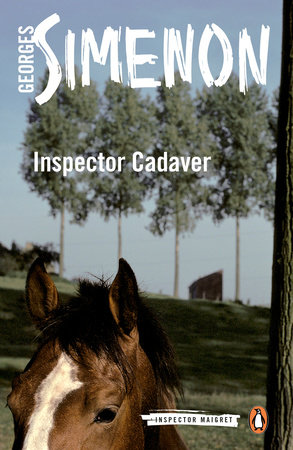
Inspector Cadaver by Georges Simenon


Inspector Cadaver by Georges Simenon

Inspector Cadaver by Georges Simenon

Belgian fiction

Original title – L’Inspecteur Cadavre

Translator William Hobson

Source – library book

I had another couple of books set aside for 1944 club but started one and didn’t get into it and the other was rather long so I had picked this up in the library last week after thinking Had Simenon wrote any books in 1944. Not that hard to imagine he hadn’t as he wrote 700 novels in his life and there is a good chance he had written some books in 1944. He turned out to have written three Maigret books that year This and as the earlier title was Maigret and the fortuneteller and Maigret and the toy village the later I knew as it was used as one of the earlier ITV Maigret series with Micheal Gambon called Felice. Now it has a common theme with this book as well.

“You don’t need anything ? I was forgetting … let me show you the w.c..”

The Men shake hands, and then Maigret undresses and gets in bed. He hears noises in the house. from very far off in his half sleep his ears cathc what sounds like the murmuring of voices , but it sonns fades awaym and the house becomes quiet as it is dark.

He falls asleep, of thinks he does. He keeps seeing the dismal face of Carve, who had to be the most miserable man on this earht, and then he dreams that the apple-cheeked maid who waited on them at dinner is bringing him his breakfast.

Magiret arrives and meets carve and dreams of him and the local maid that first nifght in the village.

Felice like Inspector Cadaver sees Maigret outside his home turf of Paris. He heads to a small village like in Felice. This time he is doing a favor for a Judge friend. The brother in law of the Judge Etienne Naud a landowner in the village of Saint Aubin Les Marias. On January 7 a man was killed by the train the Albert was crushed by a train.The young man had a connection to the Naud family.  Now the Judge is worried as he brother in law has said the rumor going around is that he has done it and Maigret is asked to go and try and find out what happened. When he arrives he sees another man that he has known in the past a former Policeman that Maigret had a run in whilst they were both still policeman the man Carve was called Inspector cadaver by his fellow officers. He wasn’t the best policeman what is he doing in the village. As Maigret starts to ask questions around the village everyone is silent. But as it becomes clear what sort of man Maigret is and that is a man of truth and justice the locals start to open up about the event before and during that fateful night.

The question Maigret had been turning over in his mind since the previous evening was this;  was he staying with decent sorts who had nothing to hide and were extending their warmest welcome to a guest from Paris, or was he an undesirable outsider whom examining Magistrate Brejon had thoughtlessly imposed on a non plussed household who would gladly have dispensed with his services.

Maigret gets there and feelslike the Nauds doin’t really want him there.

I was reading this earlier in the week and Kaggyy put up her review of this book as well. I left reading it so I had read the book and thought what I thought of the book. This has part of what we haven’t seen yet in the recent Maigret tv series and that is him outside Paris he was in one of the new books but it did link back to Paris this is a story set in the Village. I had the Gambon Maigret in mind for this story as he seems o more suited in my mind to the ones outside Paris he actually did what Simenon did there and Kaggy point out and that he tended to side with the common folk in the story this especially in Felice where he sided with the young woman in the village  that everyone else had problems with he was a man of the poor and the underdog . he is also like a terrier dog as a detective not graceful more get stuck in and the clues are there and he goes around at times he is quite blunt in this book. Then there is also the story of his old rival as a second storyline the story of how Carve was made to leave the police. Another enjoyable book in this series and it brings to eight of the Maigrets I have reviewed there is still a lot to go in the series hopefully next club will also have one to review !!

War and Turpentine by Stefan Hertmans


War and Turpentine by Stefan Hertmans

Belgian fiction

Original title – Oorlog en terpentijn

Translator- David Mckay

Source – review copy

Stefan Hertmans is a poet , novelist and short story writer . He has won a number of prizes including the AKO prize for this book. this is the next stop on the man booker list this is the one I felt would be on the liust as it was frequently compared to Sebald when it came out, which in a way made me get to it later in the list in case I was disappointed by it , which I wasn’t that it was very Sebald like (it isn’t really yes it has pictures and place and memories but in another context it isn’t Sebald work mainly dealt with the outfall of world war two ).

Strange as it may seem, there were details of my own world that never offered up their historical secrets until I read his memoirs: a gold pocket watch shattering on the tile floor ; an oval cigarette from a silver case , smoked in secret, which made me nauseous when I was fifteen years old ; a worn reddish-brown scarf on the discard cupboards in the dilapidated greenhouses, covered within droplets of the disoriented blackbirds that would throw themselves against the glass in panic .

Images of his youth come to life in his grandfathers notebooks


The story goes Urbain wrote these notebooks and he died in the sixties the son of a painter also called Urbaine were passed to his grand son Stefan the writer but he left them for thirty year what follows is his story of reading them. The first part of the story is pre world war one father and son in a the city og Ghent  just getting by making ends meet painting small fresco in churches around the town , a one point the son takes a job in gelatine factory , remind me of the time we see David Copperfield an artist in the making in the bottle factory another dangerous job .Now unlike Dickens in Urbaine case the war sends his life in another direction the most of the book is the grandfathers notebooks of his war experiences , very much like most war accounts of the tome we have a real feel of Mud , the trenches , rats and death in the air all around them. A break comes when he is sent to Liverpool to recover and paints the sea and places round Wallasey (I found an ironic connection to Hitler , here who many years earlier was in the same city painting ) The last part is post war a love story.

As soon as my health and the weather permitted I went out searching .Maud was right:in St James Street I found the church of St Vincent de Paul. My heart was pounding as I entered its damp , sparsely decorated interior. On the dingy walls to the left, there was no sign of any murals my father might have worked on. On the right , I found the stations of the cross on panels .there happened to be men at work in the church , whitewashing walls. They couldn’t recall any frescos under the whitewash.

Urbain tries to find a fresco his father did in Liverpool was he recovers

Now the book is littered with pictures the start that inspired father and son , the buildings of Ghent . Then in the war years the only picture we see is the one of Urbaine in his uniform at the end of the war a man with that thousand yard stare of someone who has seen death in the eye. This is slightly like Sebald , even in the last part of the book there is a quote from Vertigo .  The nearest english novel would be Siegfried  Sassoon cycle of books The Sherston trilogy , which follows a mans pre war and post war and war-time journey like this novel does . Hertmans manages to capture the madness brutality and darkness of the first world war.  I enjoyed this book it is destined to be a modern classic.

Football by Jean-Philippe Toussaint euro 2016

Football by Jean-Philippe Toussaint

Belgium Non -Fiction

original title – Football

Translator – Shaun Whiteside

Source – Review copy

Jean Philippe Toussaint is a writer I had long wanted to get to his novels are well-known for a minimalist style , so when this collection of prose piece by him on football arrived from Fitzcarraldo editions I got a chance to tick off a writer I had wanted to get to for a while. He has written nine novels which have been translated into many languages and he has won a number of book prizes as well .This also ties in with my current set of Euro 2016 related books as it follows his life in recent years tracking the Belgium team.

Childhood

In Brussels, in the playgrounds of primary school no. 9 , we used to play football at break time and the criterion used ro seprate the two teams was nopt little versus big or fair versus dark or year four versus year five, it was moral versus religion . At the start of the year, in this secular school on rue Americaine in Ixelles, you effectively had to choose between Moral and religion, according to whether you parents or we ourselves wanted to take catechism classes.

I love this way they choose the teams in my day it was against a wall and I was often near the end .

The book is a collection of short essays about his early life and football , things like playing with friends , getting a bad injury whilst a kid. what jersey he loves.I like the insight into shirts and teams we always think of certain teams and colours his examples are France in Blue, Brazil in Yellow and Germany in White.But what happens when they don’t where that shirt of course here in the England this was the case on our biggest game ever the 66 final where the team wore red shirts! Then he finally watches matches as an adult first in France 98 which strangely serves as a mid-point in the book and a tying to the end of the book as of course both involve the french player Zidane.Toussaints memories are tied to his team Belgium and their course through the cup which in this case was three draws . Then what follows is how he sees the team at the following world cups the next saw them make the 2nd round only to lose to Brazil.then the missing belgium team means a short piece on 2006. Then South Africa also a year without Belgium . The work is rounded off with an earlier piece he wrote on Zidane about the mad night 2006 when Zidane end his career getting sent off for the first time for headbutting an italian player in an act out-of-place for the great player and hero of the first year Toussaint talks about .

Night has fallen over Berlin now, the intensity if the light has faded and Zidane has suddenly felt the sky darkening over his shoulders, leaving nothing in the firmament but the flayed trails of blck and pink clouds. Water mixed with night is an old remorse that will not sleep

No one in the stadium has understood what just happened.

That moment in 2006 from the piece Zidane’s melancholy

Now I find hard not to like this book as Toussaint is a true football fan , the real shame for me is the book ends just as the story of his team and country is about to turn the book ends in 2010 , when in 2014 the belgium team makes it quarter-final and even this time have been maybe the best team or second best team at euro 2016 so far with their team of stars. So lets hope we get a football 2 with these years at some point Toussaints take on Hazzard, Fellani and so on. The Belgium team is packed with talent not seen since the days of Enzo Scifo the great Belgium player with the Italian name that caught the eye in the 80s world cups where they finished 4th in 86 and Scifo was one of the stars of that year.This is one of the best football books I have read. But for further reading on the Benelux football I would point you in the way of Brilliant Orange a book on the mad genius of Dutch football .


The man I became by Peter Verhelst


The Man I became by Peter Verhelst

Belgian  fiction

Original title – Geschiedenis van een Berg

Translator – David Colmer

Source – review copy

It’s translation Thursday so I choose the latest book from one of my favourite publishers and the first in this years series. As you may or may not know every year Peirene collects their books around a theme, this years theme is Fairy tale. Peter Verhelst has written more than twenty books and has won a number of major prizes such as the Flemish state prize. This is his 11th novel . He is considered a post modernist writer, he also writes poetry and plays.

I don’t know exactly when – I still couldn’t think in terms of days and years, that’s how long ago it was – but the heat made us so drowsy that we nodded off and slept whole afternoon away in a heap, spread eagled on top of each other. We caught termites by pushing long twigs, as flexible as blade of grass, into their mounds and then licking the twigs clean.

Opening as the gorilla remembers where he was before he was captured

The man I became is the story of a gorilla told from his point of view, from being captured to arriving in europe where they start to turn the Ape to human to get him to fit in. The first way of trying to fit in first is at a cocktail party then he ends up at an over the top theme park. In this novel we meet the gorilla he learns to talk  and starts to think like a human even in the sense of times and starts on a path to become human in a way even thou he isn’t  but the more he sees of the human world the more he finds it against his own nature and then the theme park burns down.

Dreamland was a success. After every performance the applause was tumultuous. It attracted newspapers, magazines, camera crews. People came from all over the new world. The organizers decided to go from two shows a day to three. After a week the first accident happened. One of the Giraffes broke a leg. As a result the other giraffes had to work even more.

At the morning meeting the next day, the human ordered me to take over several off his duties. He would be concentrating on the supply of new animals and trainers. I worked day and night to ensure that both the training and organization of the shows ran smoothly. the giraffe with the broken leg was nowhere to be seen

I liked this as I imagined removing the animal names and adding refugees being overworked !

This is not the first book told by an ape , I loved will self’s great apes years ago and this is on a similar vein the use of the gorilla is a symbol for showing the flaws in human nature . This is a clever way at looking at human nature , why would we want an ape to be a human ? , then be in a show on civilization with a whole load of other animals trying to be human. I loved the way dreamland is put together its like a nightmare version of disneyland put together by Werner Herzog. He also shows the way we can all break replace an Ape with say a Syrian man or a child from sub Saharan Africa and at the core of this is an allegory to being an outsider in a different place we don’t always fit and sometimes we need to break out.A powerful modern take on a fairy tale it does what Orwell did in animal farm and communism with a theme park and refugees or people forced into europe .

Have you read a book narrated by animal ?